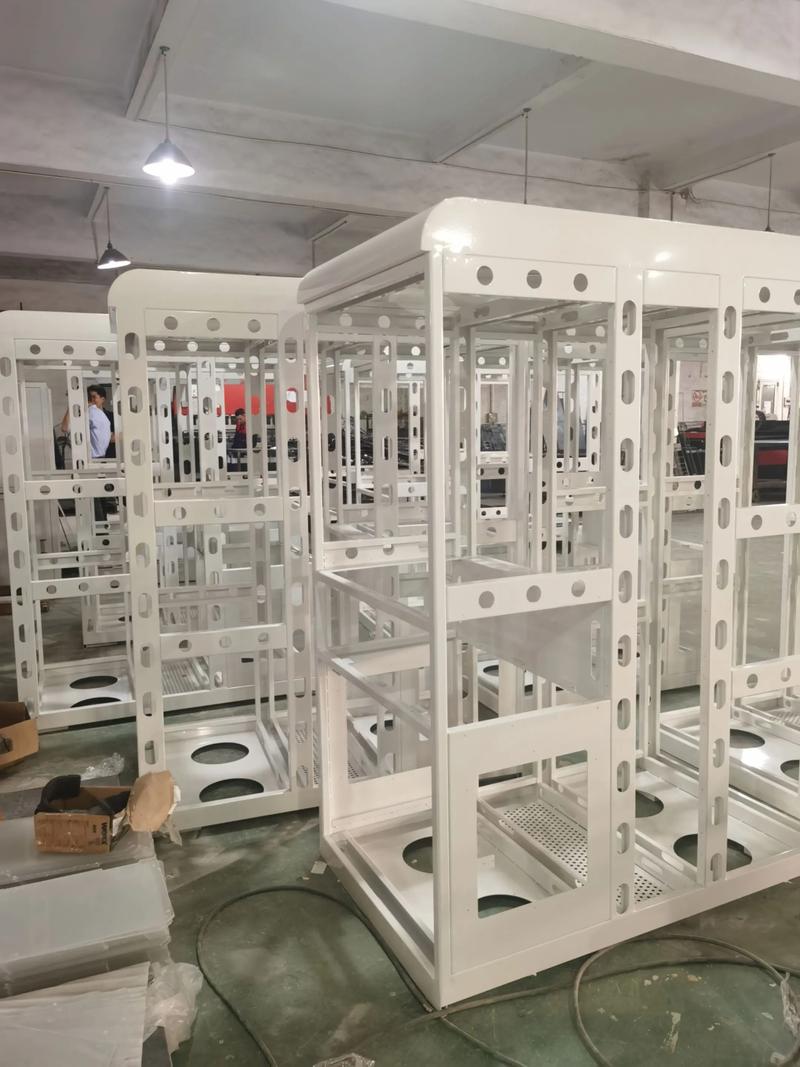
What is Welding? The Professional’s Guide to Precision Metal Joining
In the world of sheet metal fabrication, welding is more than just joining two pieces of metal; it is a critical metallurgical process that determines the structural integrity, aesthetics, and longevity of the final assembly. For procurement managers and engineers in demanding sectors like Singapore’s semiconductor industry or U.S. medical device manufacturing, understanding the nuances of welding is essential for supply chain excellence.
1. Defining Industrial Welding in a B2B Context
At its core, welding is a fabrication process that joins materials—usually metals or thermoplastics—by using high heat to melt the parts together and allowing them to cool, causing fusion. Unlike brazing or soldering, which melt a lower-melting-point metal to form a bond, welding fuses the base metals themselves, often with the addition of a filler material.
In precision sheet metal work, the challenge isn't just the bond—it's thermal management. Excessive heat leads to warping, which can ruin a high-tolerance CNC machined component.
2. Common Welding Processes in Precision Fabrication
Choosing the right welding method is a balance between cost, speed, and precision.
TIG Welding (Tungsten Inert Gas)
-
Technical Name: GTAW (Gas Tungsten Arc Welding).
-
Why it matters: TIG is the "gold standard" for precision. It provides the cleanest welds and the highest level of control.
-
Best for: Thin-gauge stainless steel and aluminum used in medical housings or laboratory equipment. It’s the preferred choice for the Singaporean market, where aesthetic finish and zero-contamination are paramount.
MIG Welding (Metal Inert Gas)
-
Technical Name: GMAW (Gas Metal Arc Welding).
-
Why it matters: It is significantly faster than TIG and highly effective for thicker materials.
-
Best for: Structural frames, heavy-duty enclosures, and high-volume production runs for U.S. industrial machinery.
Laser Welding
-
The Modern Edge: Utilizing a concentrated beam of light, laser welding offers the smallest Heat Affected Zone (HAZ).
-
Best for: High-tech applications where minimal distortion and high-speed automation are required.
3. Material Considerations: Stainless Steel vs. Aluminum
A veteran fabricator knows that "welding is not one-size-fits-all."
-
Stainless Steel: Requires back-purging with Argon to prevent "sugar" (oxidation) on the backside of the weld, especially for food-grade or medical applications.
-
Aluminum: Its high thermal conductivity and oxide layer require specialized AC (Alternating Current) TIG welding and meticulous pre-cleaning.
4. Quality Control & Compliance: The B2B Bridge
When exporting to the USA, adherence to AWS (American Welding Society) standards is often a prerequisite. Similarly, for the Singapore market, ISO 3834 certification can be a major competitive advantage.
Our quality assurance protocol includes:
-
Visual Inspection (VT): Checking for undercut, porosity, and penetration.
-
Dye Penetrant Testing (PT): Detecting surface-breaking defects in critical joints.
-
Dimensional Verification: Using CMM to ensure that the welding heat has not pulled the part out of tolerance.
5. Conclusion: Why Your Choice of Welding Partner Matters
"What is welding?" It is the backbone of your product's durability. A cheap weld is a liability; a precision weld is an investment. By integrating DFM (Design for Manufacturing) at the welding stage, we help our global partners reduce secondary grinding costs and ensure every assembly meets the most stringent mechanical requirements.