
Aluminum Fabrication
What is Aluminium Sheet Metal Fabrication
The aluminum sheet metal fabrication is a production process of aluminum sheets. The aluminum is corrosion-resistant and lightweight that makes them popular in the metal manufacturing process. These processes can create a precise part, component, or end product. Most industrial sectors are utilizing aluminum sheet metal fabrication to manufacture any finish products.
XHX has rich experience in aluminum sheet metal fabrication. It allows us to manufacture different aluminum products such as enclosures, cans, cars, airplanes, appliances, and many more. We have professional engineers to process the aluminum sheet metal fabrication, from cutting, forming to finishing.
If you need custom aluminum sheet fabrication services, please contact us directly.
Why XHX Aluminium Sheet Metal Fabrication




Because of its elasticity and malleability characteristics, aluminum is often used in many industries. Aluminum sheet metal is easy to shape and bent.
The aluminum sheet metals are popular for their corrosion and rust-resistant. For longer life, XHX is capable of wet painting, metal finishing, powder coating, etc.
XHX aluminum sheet metal fabrication is a cost-effective and flexible solution to plastic fabrication problems. Aluminum provides more strength and affordability than plastics.
The aluminum metal sheets are lightweight. Therefore, they are an excellent solution for different project fabrication that requires versatility.
Aluminium Sheet Metal Fabrication Material
XHX has decades of experience in fabricating different kinds of aluminum. Our team works with different alloys, such as:
· 3003-H14 and 3003 Alloy: These alloys are low-cost, still formable, corrosion-resistant, and weldable. It is used for drawing, spinning, and stamping products and parts. Also, for producing chemical equipment, cooking utensils, storage tanks, mailboxes, and many more.
· Alloy 5052-H32: These alloys offer good formability, corrosion-resistant, and weldability. They are widely utilized for food processing equipment, pressure vessels, electronic chassis, and aircraft components. The alloy 5052-H32 is suitable to produce parts and components that require good formability and strength.
· Alloy 6061-T6, 6061-T4, 6061: These alloys are less weldable and formable compared to other grades. It is widely used for frames, structural components, machine parts, electric fittings, hinge pins, etc. 6061 series of alloys are suitable for heavy-duty structures that need corrosion resistance. These alloys are easily formed and cold work in annealed conditions.
XHX provides various alloy grades for aluminum sheet metal fabrication to meet your requirements. Contact us for more information.
XHX Aluminium Sheet Metal Fabrication for Various Industries
Aluminums have flexible nature and are cost-effective. It also offers a wide range of grades and options. Their excellent properties make them ideal in different industries. For instance, the aerospace industry usually utilizes aluminum due to its high-strength property. Moreover, aluminiums are corrosion resistant which makes them popular in the marine industry.
XHX specializes in aluminium sheet fabrication for various industries, such as:
· Medical
· Defense/Military
· Energy
· Aerospace/Avionics
· Custom projects
· Electronic enclosures
Contact us for your aluminium sheet metal fabrication needs!
Aluminium Sheet Metal Fabrication Process
There are many processes in the fabrication of aluminium sheet metal. The process allows the aluminium sheet to form into a three-dimensional piece or component. XHX aluminium sheet metal fabrication is the best solution to produce more complex, large parts or systems.
Cutting: There are two types of cutting: shear and non-shear. Shear cutting is widely utilized in nonindustrial applications. Non-shear cutting is employed in most industrial applications.
Forming: It is a process to reshape the aluminum without cutting it. The forming process includes bending, stamping, extruding, etc.
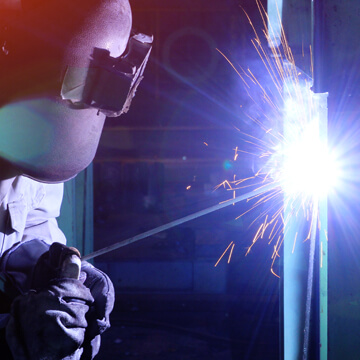
Welding and Brazing: This process means to melt and join metals together. It requires melting materials.
Adhesives and Riveting: It is a process of joining that does not need melting materials.
Finishing: Components, parts, or end products involve different finishing like deburring, sandblasting, coating, or annealing.