
New Energy Vehicle Sheet Metal Structural Components Solutions | XHX Metal
Custom Sheet Metal Solutions for New Energy Vehicle Structural Components: A Practical Guide for Global EV Supply Chain Buyers
The global transition to electric vehicles is accelerating demand for precision-engineered structural components. Battery enclosures, motor housings, charging station cabinets, power distribution boxes, and thermal management brackets all rely on custom sheet metal fabrication to meet the weight, safety, and durability requirements of modern new energy vehicles (NEVs).
For OEMs and Tier 1 suppliers sourcing from Asia, finding a sheet metal fabrication partner with NEV-specific manufacturing experience is critical. The enclosure and structural parts must withstand vibration, thermal cycling, and crash safety requirements while maintaining dimensional accuracy across production volumes.
Guangdong Xinghaoxin Technology Co., Ltd. (XHX Metal), an ISO9001-certified manufacturer founded in 2014, provides custom sheet metal fabrication for new energy vehicle structural components, EV charging infrastructure enclosures, battery system brackets, motor housing assemblies, and other precision metal parts for the global EV supply chain. Our 2,000㎡ production facility and over a decade of sheet metal expertise support OEM and ODM projects from prototyping to volume production.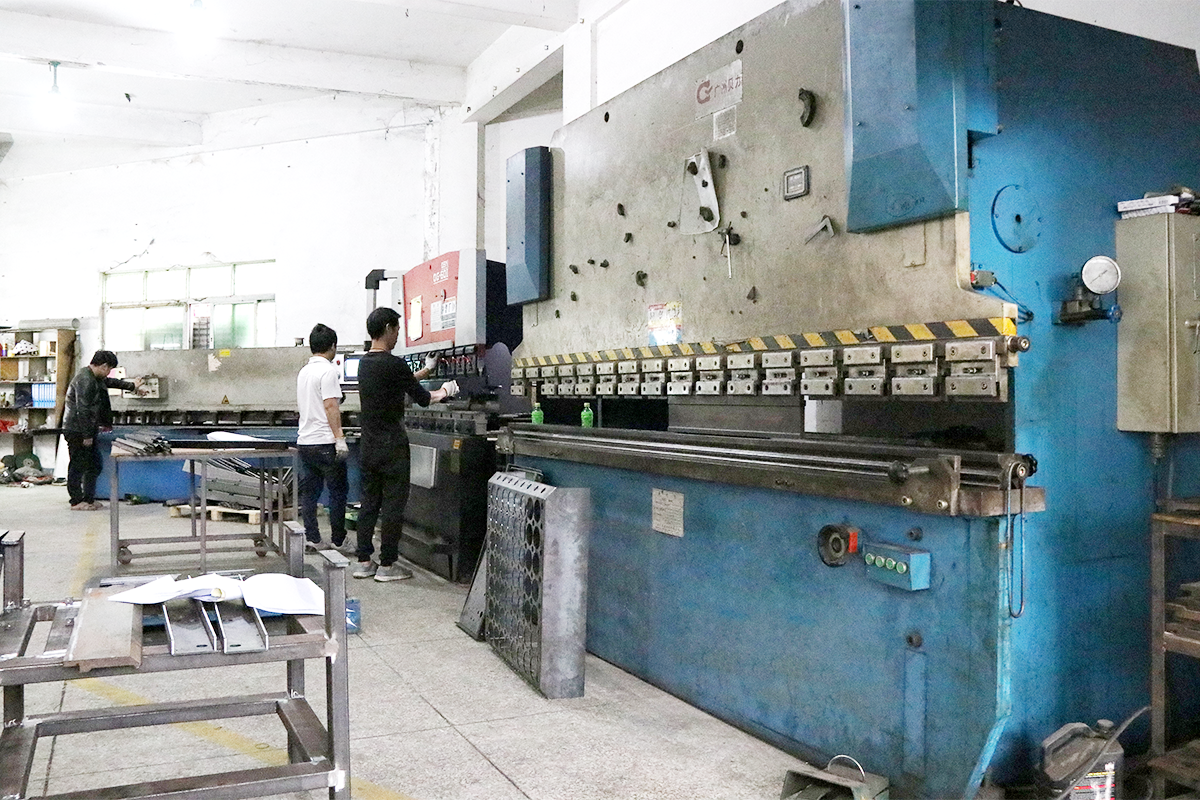
Why New Energy Vehicle Structural Components Require Specialized Sheet Metal Fabrication
Standard metal boxes and brackets are not designed for electric vehicle applications. NEV structural parts face unique challenges: high-voltage isolation requirements, IP67/IP69K sealing for battery enclosures, lightweight design for range optimization, precise fitment for automated assembly lines, and corrosion resistance for long-term reliability.
Custom sheet metal fabrication addresses these requirements through material selection, precision manufacturing, and quality-controlled production. Laser cutting creates accurate mounting holes, ventilation slots, and cable entry ports. CNC bending forms complex 3D structures with repeatable angles. Welding processes provide structural integrity and leak-proof seams for battery enclosures. Powder coating and surface treatments deliver corrosion protection and thermal management properties.
Key New Energy Vehicle Structural Components Manufactured with Sheet Metal
Battery Enclosures and Lithium Battery Boxes — Battery enclosures are among the most demanding structural components in an EV. They must house battery modules securely, provide thermal management pathways, withstand crash loads, and maintain a waterproof seal. XHX Metal fabricates custom battery boxes from galvanized steel, stainless steel, and aluminum alloys with precision-welded seams, mounting brackets, cable routing channels, and pressure-relief vent features.
Motor Housings and Drive Unit Enclosures — The electric drive unit enclosure protects the motor and gearbox assembly from contaminants while providing structural mounting to the vehicle chassis. Custom sheet metal housings must achieve tight tolerances for bearing fits, sealing surfaces, and sensor mounting points. CNC bending and precision welding ensure consistent geometry across production batches.
Power Distribution Boxes and Junction Boxes — High-voltage junction boxes and power distribution units require insulated metal enclosures with clearly defined cable entry zones, busbar mounting points, and thermal management features. Laser-cut precision ensures accurate cutouts for connectors and cooling vents.
Battery Pack End Plates, Busbar Covers, and Module Brackets — Within battery packs, end plates and brackets must provide structural rigidity while minimizing weight. Aluminum and galvanized steel are common material choices. CNC punching and laser cutting produce accurate hole patterns for module stacking and cooling channel alignment.
Thermal Management Component Brackets — Cold plate brackets, coolant pipe supports, and heat sink mounting frames are fabricated from aluminum for thermal conductivity and weight reduction. These components must align precisely with the battery module layout and cooling system routing.
Material Selection for EV Structural Sheet Metal Parts
Material choice depends on the component function, weight target, thermal requirements, and cost constraints.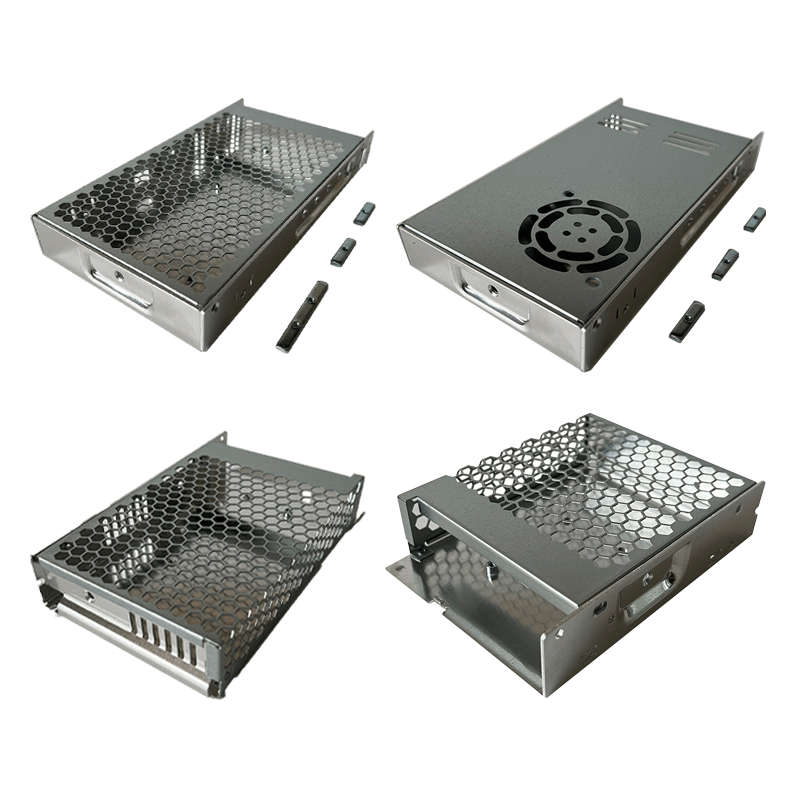
Aluminum Alloys (5052, 6061, 6063): Lightweight, good thermal conductivity, corrosion resistant. Used for battery enclosures, heat sink brackets, motor housing covers, and lightweight structural frames. Aluminum fabrication requires specialized welding techniques and surface preparation for optimal results.
Galvanized Steel (SGCC, DX51D+Z): Cost-effective, strong, excellent corrosion resistance from zinc coating. Commonly used for charging station cabinets, power distribution boxes, and structural brackets where weight is less critical.
Stainless Steel (304, 316L): High strength and corrosion resistance. Suitable for battery pack end plates, busbar covers, and components in high-humidity or salt-spray environments such as off-road EV and marine applications.
Cold Rolled Steel (SPCC, DC01): Good formability, cost-effective for interior structural parts and brackets that are subsequently powder coated for protection.
How XHX Metal Manufactures NEV Structural Components
Design Review and DFM — Our engineering team reviews customer drawings, 3D models, and assembly requirements. We identify potential manufacturability issues, suggest material alternatives, and optimize part design for cost-effective production while maintaining functional requirements.
Laser Cutting — High-power fiber laser cutting machines produce clean, burr-free edges on aluminum, steel, and stainless steel sheets. Accurate cutouts for connectors, vents, cable glands, and mounting holes are achieved within tight tolerances.
CNC Bending and Forming — Precision press brakes handle complex bend sequences for battery box trays, cabinet bodies, and bracket profiles. Angle accuracy within ±0.5° ensures consistent assembly fitment.
Welding and Assembly — TIG welding for aluminum components, MIG welding for steel structures, and spot welding for high-volume bracket assemblies. Weld quality is verified through visual inspection and dimensional checking.
Surface Finishing — Powder coating in custom colors and textures for corrosion protection and appearance. Aluminum parts can receive anodizing for additional hardness and corrosion resistance.
Inspection and Quality Control — Dimensional inspection, surface quality check, weld integrity verification, and packaging preparation before shipment. ISO9001 processes are followed throughout production.
What to Include in Your RFQ for NEV Sheet Metal Parts
To receive an accurate quotation for new energy vehicle structural components, please provide 2D drawings with dimensions and tolerances, 3D files (STEP or IGES preferred), material specification and grade, surface finish requirements, annual volume and order quantity, target weight range if applicable, and any applicable standards such as IP rating, UL, or automotive specifications.
For early-stage projects, reference photos, sample parts, or assembly context can help our engineering team understand the application and recommend the most cost-effective manufacturing approach.
Why Choose XHX Metal for NEV Structural Components
XHX Metal has served global B2B customers across new energy, robotics, industrial equipment, medical devices, electronics, and automation industries since 2014. Our over 10 years of sheet metal fabrication experience, ISO9001-certified quality system, 2,000㎡ production facility with advanced CNC equipment, and engineering support for design optimization from prototype to production make us a reliable partner for EV supply chain buyers.
We understand the quality standards and documentation requirements of the NEV industry. Whether your project involves battery enclosure prototypes, charging cabinet production runs, or motor housing volume manufacturing, XHX Metal can deliver precise, consistent, and on-time results.
FAQ
Q: Can XHX Metal fabricate battery enclosures for electric vehicles?
A: Yes. We manufacture custom battery boxes and enclosures from aluminum, galvanized steel, and stainless steel with welded seams, mounting brackets, and sealing provisions for EV and energy storage applications.
Q: What materials do you recommend for EV charging station cabinets?
A: Galvanized steel with outdoor-grade powder coating is a common choice for charging station cabinets due to its corrosion resistance and cost-effectiveness. Stainless steel is also available for premium installations.
Q: Can you provide aluminum welding for motor housing components?
A: Yes. Our TIG welding process is well-suited for aluminum alloys used in motor housings and drive unit enclosures. We can achieve consistent weld quality with proper shielding gas and filler material selection.
Q: Do you support prototype quantities before mass production?
A: Yes. We support low-volume prototypes, engineering samples, and pilot runs before committing to full production volumes. This allows design validation before tooling investments.
Q: What quality certifications does XHX Metal hold?
A: XHX Metal operates under an ISO9001-certified quality management system. Our manufacturing processes are documented and traceable for automotive and industrial applications.