
The Definitive Guide to Aluminum Surface Treatment in Precision Sheet Metal
The Definitive Guide to Aluminum Surface Treatment in Precision Sheet Metal Fabrication
Introduction In the competitive landscape of global manufacturing, the difference between a prototype and a market-ready industrial component often lies in the final few microns of its surface. For engineers and procurement officers sourcing from XHX Metal, aluminum is the material of choice for its weight-to-strength ratio. However, without the correct aluminum surface treatment, even the most precisely laser-cut part is vulnerable to atmospheric corrosion, galling, and electrical failure.
This guide serves as a comprehensive technical resource for selecting, specifying, and auditing surface finishes for aluminum sheet metal parts.
Chapter 1: The Metallurgy of Aluminum Surfaces
Before discussing coatings, we must understand the substrate. Unlike steel, aluminum forms a natural, microscopic oxide layer ($Al_2O_3$) immediately upon exposure to air. While this provides basic protection, it is insufficient for industrial environments.
1.1 Material Grade Compatibility
At XHX Metal, we find that the success of a surface treatment depends heavily on the alloy:
-
5052 Aluminum: Excellent for marine environments; takes anodizing well but may show slight color variations.
-
6061 Aluminum: The "gold standard" for structural parts; produces the most consistent results in Type II and Type III anodizing.
-
7075 Aluminum: High strength but contains more copper, which can complicate the anodizing process, requiring tighter temperature control in the electrolyte bath.
Chapter 2: Anodizing – Converting the Surface
Anodizing is not a coating; it is a conversion process. It transforms the aluminum surface into a ceramic-like layer that is integrated with the underlying substrate.

2.1 Type II Anodizing (Sulfuric Acid Anodizing)
This is the most common architectural and decorative finish.


-
Technical Specs: Typically 0.1 to 1.0 mil thick.
-
The XHX Advantage: We utilize high-purity dye baths to ensure UV resistance, preventing color fading in outdoor telecommunication kits.
2.2 Type III Hardcoat Anodizing
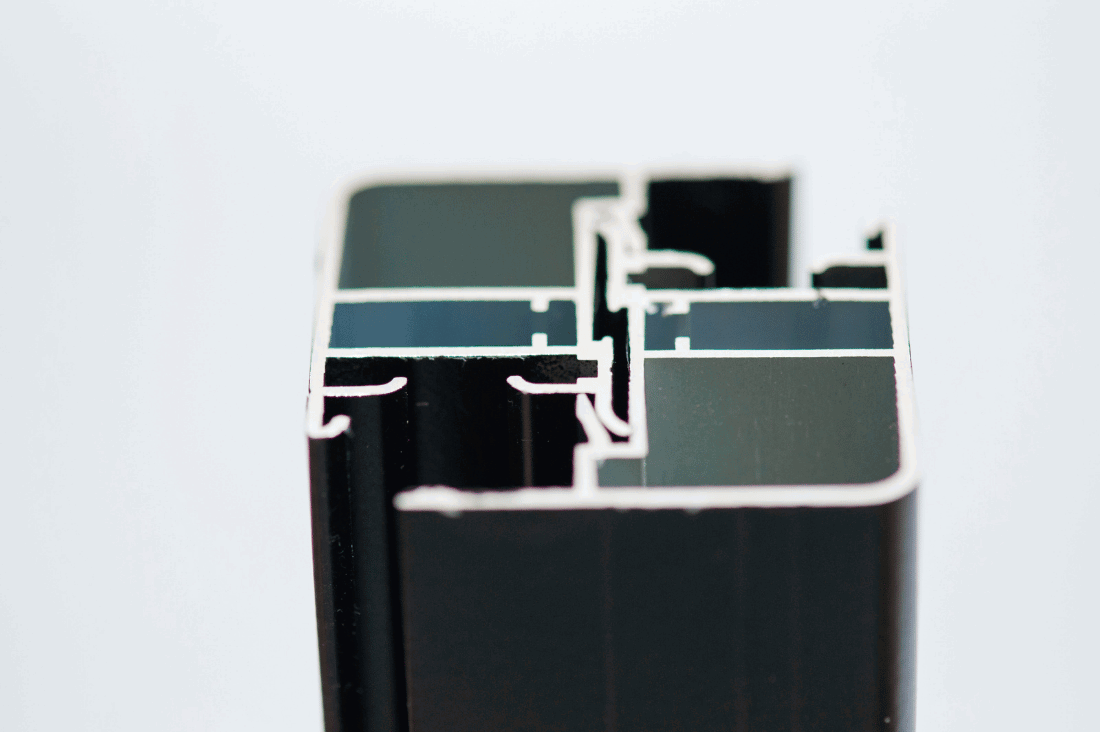
When the application involves high-friction slide rails or aerospace components, Type III is mandatory.
-
-
Hardness: Can reach up to 60-70 Rockwell C.
-
Tolerance Caution: Hardcoating builds up 50% into the surface and 50% above it. Our engineering team at XHX Metal calculates these offsets during the CNC punching and laser cutting phase to ensure final assembly fitment.
-
Chapter 3: Chemical Conversion Coating (Chem Film / Alodine)
For electronics, the primary challenge is maintaining Electrical Conductivity while preventing corrosion.
3.1 MIL-DTL-5541 Compliance
Chromate conversion (often called Alodine or Iridite) provides a protective film that is also electrically conductive.
-
Type I vs. Type II: We have shifted primarily to Type II (Hexavalent Chromium-free) to meet global RoHS and REACH standards, essential for our European and North American clients.
-
Application Tip: Use Chem Film as a primer for powder coating to achieve maximum salt-spray resistance (exceeding 168 hours).
Chapter 4: Powder Coating – The Industrial Shield
For heavy-duty sheet metal fabrications like server racks or outdoor cabinets, powder coating offers superior impact resistance.
4.1 The Pre-Treatment Protocol
A powder coat is only as good as the cleaning process. XHX Metal employs a multi-stage pre-treatment:
-
Degreasing: Removing residual oils from the bending/stamping process.
-
Etching: Creating a "micro-profile" for the powder to grip.
-
Electrostatic Application: Ensuring 100% coverage, even in "Faraday Cage" areas (deep corners of an enclosure).
Chapter 5: Mechanical Finishing & Preparation
Surface treatment isn't always chemical. Bead Blasting and Brushing are critical for aesthetics.
-
Bead Blasting: Removes directional grain marks from laser cutting, providing a uniform matte finish.
-
Grained/Brushed Finish: Ideal for stainless-look aluminum panels in high-end consumer electronics.
Chapter 6: Quality Control & Verification
How do we prove the treatment works? At XHX Metal, we don't guess; we measure.
-
Thickness Testing: Using Eddy Current gauges to verify micron levels.
-
Adhesion Testing: The Cross-Hatch tape test to ensure the coating won't peel under stress.
-
Salt Spray Testing: Simulating years of coastal exposure in a high-humidity saline chamber.
Conclusion: Partnering with XHX Metal
Choosing the right aluminum surface treatment requires a deep understanding of both chemistry and mechanical engineering. By integrating the finishing process into the initial DFM phase, XHX Metal helps global clients reduce lead times and avoid costly rework.